
Choosing who straightens your smile matters as much as choosing the treatment itself. General dentists and orthodontists can both offer Invisalign, but their training and day-to-day focus are different. Here’s what sets each one apart so you can decide what’s right for your smile.
What Is the Difference Between an Orthodontist and a Dentist?
An orthodontist is a dental specialist who finished dental school plus an additional 2 to 3 years of accredited residency focused on tooth movement, bite correction and jaw alignment. A general dentist finishes dental school and focuses on overall oral health, cleanings, fillings and restorative care. Any licensed dentist can offer Invisalign, but orthodontists are the specialists in moving teeth.
Your general dentist is like your primary care doctor for your mouth. An orthodontist is more like a specialist you see for one focused concern. Both share the same foundation in dentistry, and both play a part in keeping your smile healthy.
Here’s the quick version:
- General dentists: 4 years of dental school, broad scope of care
- Orthodontists: Dental school plus a 2 to 3 year residency in orthodontics and dentofacial orthopedics
- Shared ability: Both can provide Invisalign
- Key difference: Orthodontists are the specialists in alignment and bite
At Wiesemann Orthodontics, Dr. Ryan Wiesemann limits his practice to straightening teeth and correcting bites. That specialist focus is what you get when you start Invisalign treatment with us.
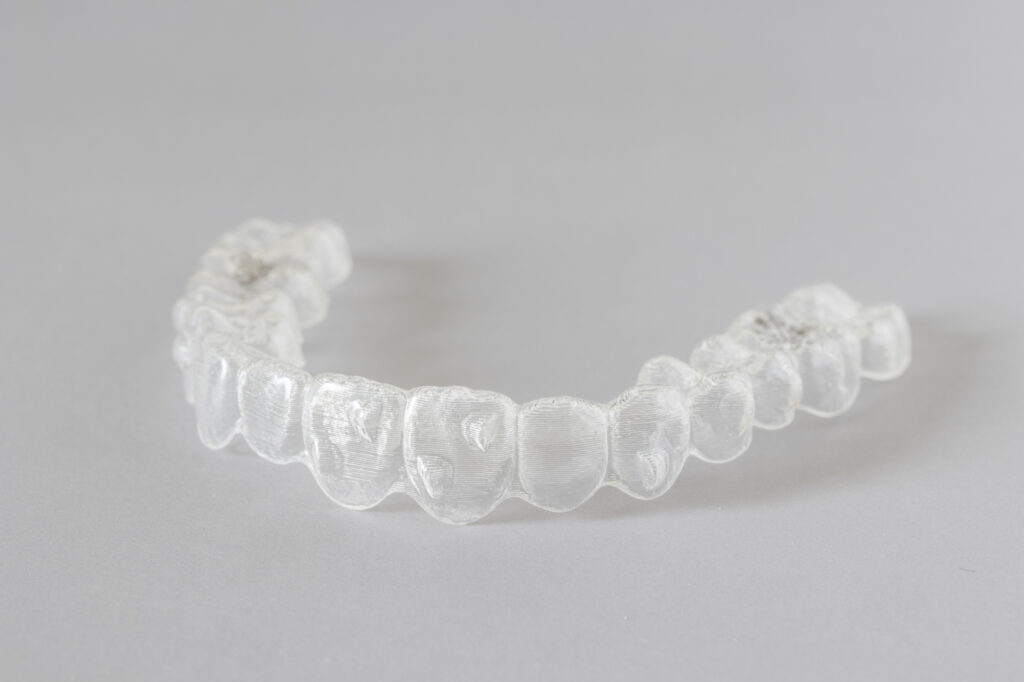
How Invisalign Treatment Works With Each Provider Type
Every Invisalign case follows a similar framework, but the person steering the plan can shape your results.
The process usually includes:
- A consultation and bite evaluation to see if Invisalign is right for you
- Scans or impressions of your teeth
- ClinCheck treatment planning through Align Technology’s software
- Custom aligners made from the approved plan
- Progress visits to check that your teeth are moving as planned
- Refinements if your teeth need extra fine-tuning at the end
Here’s where training matters. The ClinCheck plan is a starting point, and the provider decides how to adjust it: which teeth move first, where attachments go and how quickly each stage moves. An orthodontist makes those calls with years of residency training in how teeth move through bone.
Monitoring matters too. When a tooth isn’t tracking the way the plan expects, catching it early can help keep treatment on schedule.
Benefits of Choosing an Orthodontist for Invisalign
Choosing an orthodontist for Invisalign means choosing specialist training focused on one thing: moving teeth safely and predictably.
Why Does Biomechanics Training Matter?
Orthodontists spend 2 to 3 years after dental school studying how teeth move through bone, how roots respond to force and how bites work together. That training shapes every treatment plan and every aligner adjustment. It helps your provider predict how a tooth will respond, plan the right order of movements and avoid shortcuts that can lead to a poor finish or relapse. It’s the difference between following a template and building a plan around your bite.
How Does a Specialist Handle Complex Cases?
Deep bites, open bites, crossbites, severe spacing and extraction cases all call for specialized knowledge. Orthodontists manage these routinely and know when Invisalign alone is enough, when attachments or elastics should be added and when braces will give a better result. Seeing the same situations many times builds the kind of pattern recognition that helps cases finish well.
A few other benefits:
- Catching problems early. When a tooth doesn’t track as planned, specialist experience helps spot it sooner and adjust the plan.
- Combining treatments. If Invisalign alone won’t get the result you want, an orthodontist can add attachments, elastics or other tools, or pair aligners with braces.
- A full bite evaluation. Straight-looking teeth aren’t the same as a healthy bite. Orthodontists look at how your teeth come together, how your jaw works and whether the result will stay stable.
There’s also the experience of being in a practice built around orthodontics. Our team at Wiesemann Orthodontics works with braces and aligners every day, and from your first visit to your final retainers, every appointment is about straightening your smile.
Orthodontist vs. Dentist for Invisalign: Side-by-Side Comparison
Here’s how the two compare for Invisalign specifically.
| Factor | General Dentist | Orthodontist |
|---|---|---|
| Education | 4 years of dental school | Dental school plus a 2 to 3 year orthodontic residency |
| Day-to-day focus | Cleanings, fillings, crowns and overall oral health | Moving teeth and correcting bite and jaw alignment |
| Recognized dental specialty | No, general practice | Yes, orthodontics and dentofacial orthopedics |
| Can offer Invisalign | Yes | Yes |
| Bite correction training | Covered in dental school | Core focus of residency training |
| Combining aligners with braces or elastics | Varies by provider | Part of everyday orthodontic care |
Who Is a Candidate for Each Provider Type?
Not every Invisalign case needs a specialist, but many benefit from one. Here’s a general guide.
Which Cases Can a General Dentist Handle?
Mild cosmetic cases, like minor spacing or slight rotations, may be handled well by either provider. If your front teeth have shifted a bit over time and your bite is otherwise healthy, a general dentist who offers Invisalign may be a reasonable option. Simple cases with limited movement and no bite concerns tend to be the most predictable.
When Should You See an Orthodontist Instead?
Bite concerns, extraction cases, growing patients and prior dental work all benefit from specialist care:
- Moderate crowding or spacing: An orthodontist is usually the better choice because alignment changes often affect the bite.
- Bite issues: Deep bites, open bites, crossbites and overbites almost always benefit from specialist care.
- Extraction cases: When teeth need to be removed to make space, orthodontic planning is essential for proper movement and finishing.
- Teens and growing patients: Orthodontists train specifically in growth and development, which matters for younger patients whose jaws are still developing.
- Prior dental work: Crowns, bridges, veneers or implants add planning complexity that benefits from specialist experience.
- Previous orthodontic treatment: Relapse cases often involve small bite shifts that need a trained eye.
Wiesemann Orthodontics offers orthodontics for all ages, from children and teens to adults. Whether you’re a parent looking at options for your teen or an adult ready to finally fix your smile, Dr. Wiesemann can walk you through what’s realistic for your case at our offices in Bowling Green, Russellville, Portland and White House.
Frequently Asked Questions
Is every dentist who offers Invisalign an orthodontist?
No. Any licensed dentist can offer Invisalign after completing Align Technology’s training. Only providers who have completed an accredited 2 to 3 year orthodontic residency after dental school are orthodontists. If specialty training matters to you, ask whether your provider is an orthodontist or a general dentist who offers Invisalign.
How many Invisalign cases should my provider have treated?
There’s no official minimum, but experience matters. Providers who treat Invisalign cases regularly get better at anticipating problems and adjusting plans. It’s fair to ask any provider how many aligner cases they treat and how often they handle cases like yours.
Will I still need my regular dentist during Invisalign treatment?
Yes. Your general dentist handles routine cleanings, exams, fillings and overall oral health throughout treatment. Your orthodontist focuses on moving your teeth. The two work together, and we encourage you to keep up with regular dental visits while you’re in treatment with us.
Can a dentist handle a complex bite case with Invisalign?
Some can, but complex cases, like deep bites, open bites, crossbites, extraction cases or cases involving prior dental work, generally benefit from specialist care. Orthodontists plan these cases around how the bite works, not just how the teeth look. If you’ve been told your case is tricky, a consultation with an orthodontist is a smart next step.
How do I know if an orthodontist is right for me?
The easiest way is to schedule a free consultation. You’ll get a clear picture of your options and honest input on whether Invisalign fits your case. There’s no obligation, just information so you can decide with confidence. Your smile is worth it.