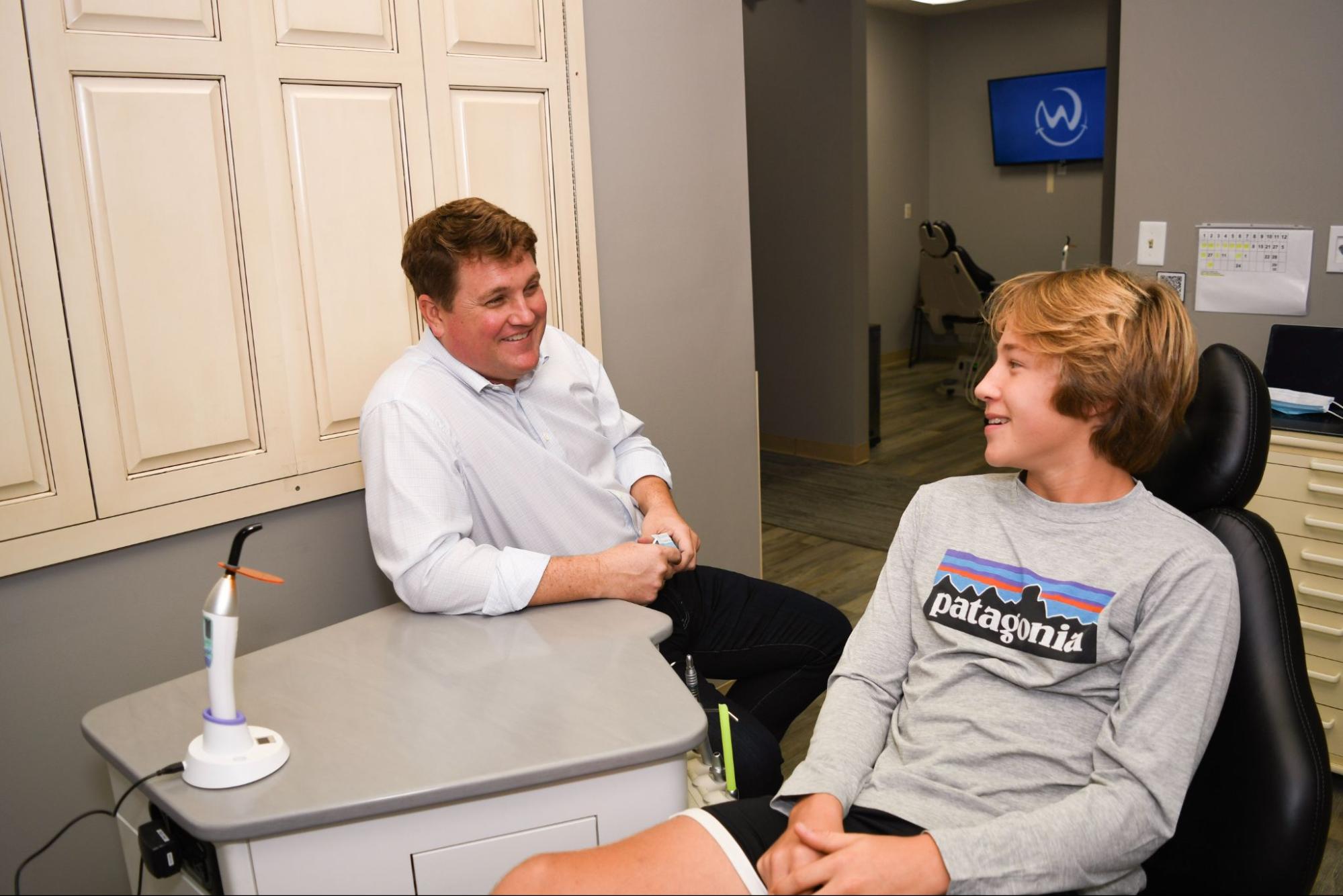
If your teeth overlap, twist or sit on top of each other, you’re dealing with dental crowding, one of the most common reasons people see an orthodontist. The good news is that both braces and Invisalign can guide those teeth into better positions for a straighter, healthier smile. At Wiesemann Orthodontics, Dr. Ryan Wiesemann helps patients of all ages find the right path to a smile they’re proud of.
Here’s what causes crowding, how treatment works and what to expect along the way.
What Are Crowded Teeth?
Crowded teeth happen when there isn’t enough room in your dental arch for all your teeth to fit side by side. Instead of lining up neatly, they overlap, rotate or push each other out of position. Crowding ranges from mild to severe and tends to get worse over time if it isn’t treated.
Common causes include:
- Genetics, which largely determine jaw size and tooth size
- A smaller jaw that can’t fit all the adult teeth
- Early loss of baby teeth, which lets neighboring teeth drift into the space
- Thumb sucking or long-term pacifier use in childhood
Severity usually falls into three levels. Mild crowding shows slight overlap. Moderate crowding involves clearly rotated or tilted teeth. Severe crowding means significant overlap, teeth blocked out of the arch or even impacted teeth.
Crowding isn’t only about looks. Tight, overlapping surfaces are harder to brush and floss, which raises your risk for cavities and gum disease. Misaligned teeth can also wear unevenly over time. And because teeth tend to drift as we age, crowding often gets worse the longer you wait.
How Braces and Invisalign Fix Crowded Teeth
Both braces and Invisalign fix crowding by gradually moving teeth into better positions, but they go about it differently. Every plan starts with a full evaluation, including X-rays, so Dr. Wiesemann can map out how your teeth need to move.
How braces work:
Metal braces and clear braces use small brackets bonded to each tooth, connected by an archwire. The wire applies steady, continuous pressure that guides teeth into alignment. Dr. Wiesemann adjusts the wires and elastics at regular visits to keep progress on track.
How Invisalign works:
Invisalign uses a series of custom clear aligners, each one slightly different from the last. You switch to a new set every one to two weeks, and each aligner shifts your teeth a little closer to their final position. Small tooth-colored attachments and elastics help Invisalign handle rotations and more involved movements.
Making room for crowded teeth:
When there isn’t enough room in the arch, orthodontists have a few ways to create space:
- Expansion in growing children, using a palatal expander while the upper jaw is still developing
- Interproximal reduction (IPR), which reshapes tiny amounts of enamel between teeth
- Extraction of one or more teeth when crowding is severe
The right approach depends on your age, how much space is needed and how your bite fits together.
After active treatment, retainers are essential. Teeth tend to drift back toward where they started, so wearing your retainer as directed protects your results. Dr. Wiesemann and the team walk every patient through retainer care so your new smile stays put.
Benefits of Treating Crowded Teeth
Straightening crowded teeth does more than improve how your smile looks. It can protect your long-term oral health, improve how your bite works and boost your confidence.
How Does Alignment Improve Oral Health?
When teeth sit side by side instead of overlapping, you can reach every surface with your toothbrush and floss. Crowded areas trap plaque and bacteria, so straightening your teeth makes daily cleaning more effective and helps lower your risk of cavities and gum disease.
- Easier brushing and flossing. Straight teeth are simpler to clean thoroughly.
- Healthier gums. Less plaque buildup means less irritation along the gumline.
Can Treatment Help Your Bite and Protect Enamel?
Properly aligned teeth meet more evenly when you chew, which spreads force across your teeth instead of concentrating it on a few. That can reduce uneven wear and lower the strain on your jaw muscles.
- Better bite function. Even contact across the arch supports comfortable chewing.
- Less uneven wear. Teeth wear more evenly when they meet at the right angles.
- Lower risk of chips. Teeth that stick out or sit at awkward angles are more likely to chip from everyday use or minor accidents.
What About Confidence and Everyday Life?
A smile you love shows up in more than photos. Many people find they smile more and feel more at ease at work, on dates and in family moments after treatment. For a lot of patients, that’s one of the biggest benefits of all.
The earlier crowding is addressed, the easier it usually is to treat. But it’s never too late. Dr. Wiesemann treats children, teens and adults.
Braces or Invisalign for Crowded Teeth?
Both options work well, and the right choice depends on how severe your crowding is, your lifestyle and your preferences. For a full side-by-side look at the two, see our guide to braces vs. Invisalign. Here’s how the choice usually plays out for crowding specifically.
When braces may be the better fit:
Braces handle severe crowding, significant bite concerns and involved rotations especially well because they apply constant pressure and give Dr. Wiesemann precise control over every tooth.
When Invisalign may be the better fit:
Invisalign is a strong choice for patients with mild to moderate crowding who want a discreet, removable option and can commit to wearing their aligners about 22 hours a day.
Not sure which is right for you? A free consultation at Wiesemann Orthodontics will give you a personalized recommendation.
Who Is a Candidate for Braces or Invisalign?
Most teens and adults with crowded teeth are candidates for one or both options. Here’s a general guide:
- Good braces candidates: Patients with mild, moderate or severe crowding, significant bite issues or involved tooth rotations that benefit from constant, precise control.
- Good Invisalign candidates: Teens and adults with mild to moderate crowding who can commit to wearing aligners about 22 hours a day. Aligners only work when they’re in your mouth.
- Must be addressed first: Active gum disease or untreated cavities need to be treated before orthodontic treatment begins.
- Special considerations: Dental implants can’t be moved with orthodontics, so their position affects treatment planning. Dr. Wiesemann will build a plan that works around any existing restorations.
Age is rarely a barrier. Healthy teeth can be moved at nearly any age. Your smile is worth it, no matter when you decide to start.
Frequently Asked Questions
Can Invisalign fix very crowded teeth?
Invisalign handles mild to moderate crowding well, and many moderate cases do well with attachments and elastics. For severe crowding with significant overlap, impacted teeth or involved rotations, braces may be the more predictable choice. Dr. Wiesemann will look at your case and recommend the option most likely to give you the best result.
Do crowded teeth always need extractions?
No. Many cases can be treated by making room in other ways, like expansion in growing children or reshaping tiny amounts of enamel between teeth. Extraction is usually saved for more severe crowding. Dr. Wiesemann will let you know at your consultation whether your case needs it.
How long does it take to fix crowded teeth?
Treatment time varies case by case, but the average is one to two years. Mild crowding may take less time, while severe cases with more movement usually take longer. Dr. Wiesemann will give you a personalized timeline at your free consultation.
Are braces or Invisalign faster for crowded teeth?
Timelines are usually similar for similar cases. Braces may have an edge for very involved crowding because they apply constant pressure, while Invisalign depends on consistent wear. For mild to moderate crowding, either option can get you there in a similar amount of time.